
Choosing the wrong valve leads to system failure. Poor flow control wastes energy and money. Imagine being able to size your valves perfectly, every single time, with confidence.
A Cv Value Calculator is a simple tool that computes the required flow coefficient (Cv) for a válvula. It uses your system’s flow rate, pressure drop, and the fluid’s specific gravity to ensure you select a valve that perfectly matches your process needs, eliminating guesswork.
Why Is Getting the Cv Value Right So Critical?
A poorly sized valve throttles your flow or causes instability. This leads to inefficient operation and can damage expensive equipment over time. Let’s make sure you avoid these common and costly problems.
The Cv value is critical because it directly defines a valve’s relationship with your system. An oversized valve gives you poor flow control, while an undersized valve creates huge pressure drops and wastes energy. Getting the Cv right ensures stable, efficient, and reliable long-term operation.
Getting the valve size right feels like a small detail, but I’ve seen it cause major headaches for clients. An engineer on a tight deadline might be tempted to just pick a valve that matches the pipe size. This is one of the most common mistakes I see. A valve is not just a piece of pipe; it’s a control instrument. Its job is to manage flow and pressure. If it’s not sized for that specific job, it will fail to do it well. Think of it like the tires on a car. You wouldn’t put small sedan tires on a giant dump truck, even if they technically fit the bolts. The performance would be terrible and unsafe. The same logic applies directly to valves in your system.
Let’s break down the two main failure modes:
The Problem with Undersized Valves
An undersized valve has a Cv value that is too low for the flow you need. It acts like a permanent bottleneck in your system. To force the required amount of fluid through this small opening, your pumps have to work much harder. This drives up your energy consumption significantly. Even worse, the high velocity of the fluid rushing through the small opening can cause erosion and wear on the válvula‘s internal parts, leading to premature failure. You also get a massive pressure drop across the valve, which can starve the equipment downstream of the pressure it needs to operate correctly.
The Problem with Oversized Valves
This might seem less obvious, but an oversized valve is often just as bad. Its Cv value is too high, meaning it allows too much flow for a given opening. To control the flow, you have to operate the valve in a nearly closed position. Most valves, especially ball and butterfly valves, are not designed for this. They lose their ability to control flow accurately when they are barely open. This can lead to process instability, where the flow rate jumps around and is hard to manage. For control valves, it makes “hunting” (constant small adjustments) a serious problem, wearing out the actuator and causing process oscillations.
| Edición | Undersized Valve (Cv Too Low) | Oversized Valve (Cv Too High) |
|---|---|---|
| Energy | High-energy consumption (pump works harder). | Potentially lower energy use, but poor performance. |
| Controlar | Can’t achieve the required maximum flow. | Poor control; valve operates near closed position. |
| Wear | High fluid velocity causes erosion and damage. | Can cause instability and actuator wear (“hunting”). |
| Presión | Causes excessive, unwanted pressure drop. | Causes very little pressure drop, making control difficult. |
How Do You Calculate the Cv Value for Liquids?
Manual calculations can be slow and are very easy to get wrong. A single misplaced decimal point can lead you to buy a completely inappropriate and expensive valve. There has to be a better way.
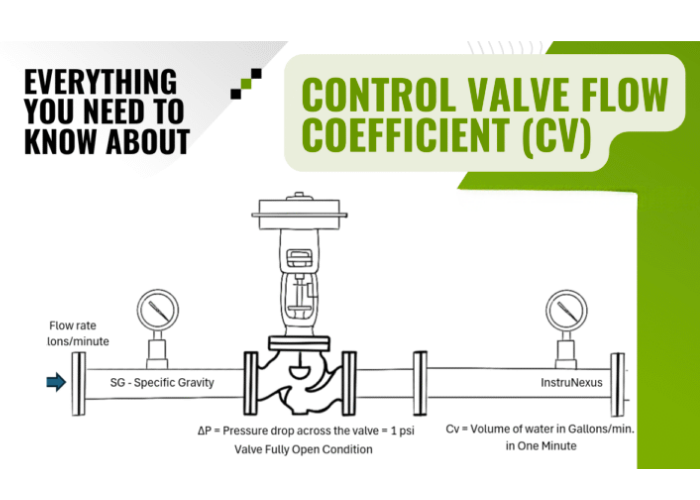
You calculate the Cv for a liquid with the formula: Cv = Q / √(ΔP / SG). In this equation, Q is your flow rate (in GPM), ΔP is the pressure drop across the valve (in PSI), and SG is the fluid’s specific gravity (water = 1).

Let’s unpack that formula so it feels less like a school exam. I find it helps to think about what each part is telling you.
- Q (Flow Rate): This is your target. It’s how much liquid you need to move through the valve, measured in US Gallons Per Minute (GPM). This is the number that your process requires to work correctly.
- ΔP (Pressure Drop): This is the “cost” of pushing the liquid through the valve. It’s the difference in pressure between the inlet and the outlet of the valve, measured in Pounds per Square Inch (PSI). You decide this value. A higher pressure drop allows you to use a smaller valve, but it costs more in pump energy. A lower pressure drop saves energy but requires a larger, often more expensive, valve. It’s a key engineering trade-off.
- SG (Specific Gravity): This tells you how heavy your fluid is compared to water. Water has an SG of 1.0. A lighter fluid like gasoline might have an SG of 0.7, while a heavier liquid like a concentrated brine could be 1.2. Heavier fluids require more force to push, so this number adjusts the calculation accordingly.
Let’s walk through the example from the introduction:
- Your Goal (Q): You need to move 25 GPM of water.
- Your Budget (ΔP): You have decided a pressure drop of 12 psi is acceptable.
- Your Fluid (SG): It’s water, so the specific gravity is 1.
Now, let’s plug it in:
- Cv = 25 / √(12 / 1)
- Cv = 25 / √(12)
- Cv = 25 / 3.464
- Cv ≈ 7.22
This result tells you to look for a válvula with a Cv value of at least 7.22. In the real world, you’d likely choose the next standard valve size up from this value. This is where a Cv Value Calculator becomes so helpful. It does this math instantly and without error. It frees you up to think about the bigger picture, like optimizing your pressure drop, instead of worrying about your arithmetic.
What’s the Difference Between Cv and Kv, and When Does It Matter?
You open a technical sheet from a European supplier and see “Kv” instead of “Cv.” Assuming they are the same could derail your international project. This simple difference in units can cause big headaches.
Cv and Kv both measure a valve’s flow capacity, but they use different units of measurement. Cv is the Imperial standard (using GPM and PSI), primarily used in the US. Kv is the metric standard (using m³/h and bar), used in Europe and most other parts of the world.
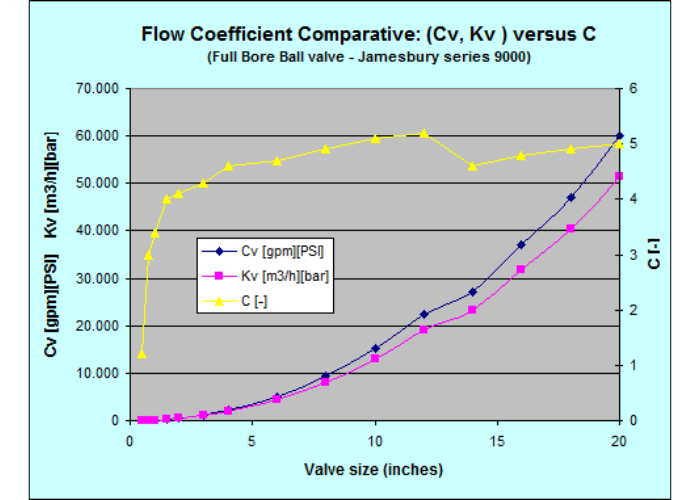
As someone who handles overseas sales, this is a topic I discuss almost weekly. A client in Nigeria, like my friend Hassan, often works on projects with equipment sourced from both the United States and Europe. It’s absolutely critical for his team to know the difference and how to convert between the two. A mistake here could mean ordering a valve that is either way too big or way too small for the job, causing major project delays.
The formal definitions show the difference clearly:
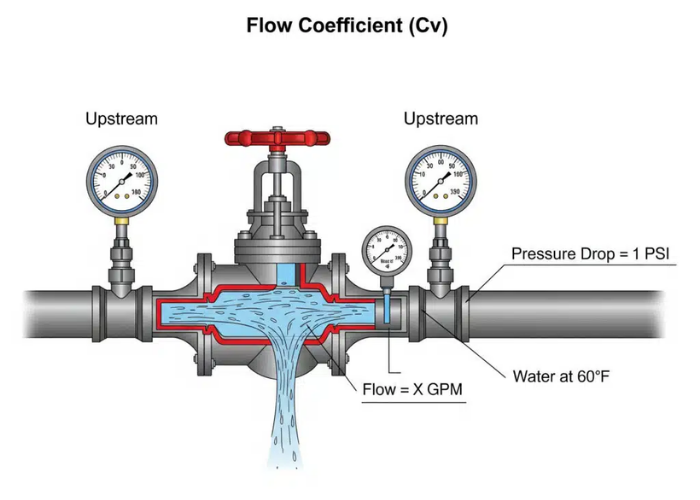
- Cv: Flow of US Gallons per Minute (GPM) of water at 60°F with a 1 PSI pressure drop.
- Kv: Flow of cubic meters per hour (m³/h) of water at 20°C with a 1 bar pressure drop.
Because they are based on different units, the numbers are not interchangeable. You need to use a conversion factor. Remembering these two simple rules will save you a lot of trouble:
- To get from Cv to Kv, you multiply by a little more than one.
- To get from Kv to Cv, you multiply by a little less than one.
Here are the specific conversion formulas:
- Kv = Cv * 0.865
- Cv = Kv * 1.156
So, a valve with a Cv of 100 would have a Kv of about 86.5. A válvula with a Kv of 100 would have a Cv of about 115.6. The difference is significant enough to cause serious problems if ignored. When you are specifying or ordering valves for an international project, always double-check which unit system is being used on the datasheet. If you are ever unsure, ask the supplier to clarify. It’s a simple question that can prevent a very expensive mistake.
| Parámetro | Cv (Flow Coefficient) | Kv (Flow Coefficient) |
|---|---|---|
| Unit System | Imperial / US Customary | Metric |
| Flow Rate Unit | US Gallons per Minute (GPM) | Cubic Meters per Hour (m³/h) |
| Pressure Drop Unit | Pounds per Square Inch (PSI) | Bar |
| Primary Region | United States | Europe and most other countries |
| Conversion | Cv = Kv * 1.156 | Kv = Cv * 0.865 |
How Do Other Factors Change a Valve’s Real-World Cv?
The basic formula looks simple, but your plant isn’t a textbook. Real-world factors like fluid viscosity, temperature, and even the valve’s design can all change the flow. Ignoring these details leads to inaccurate sizing.
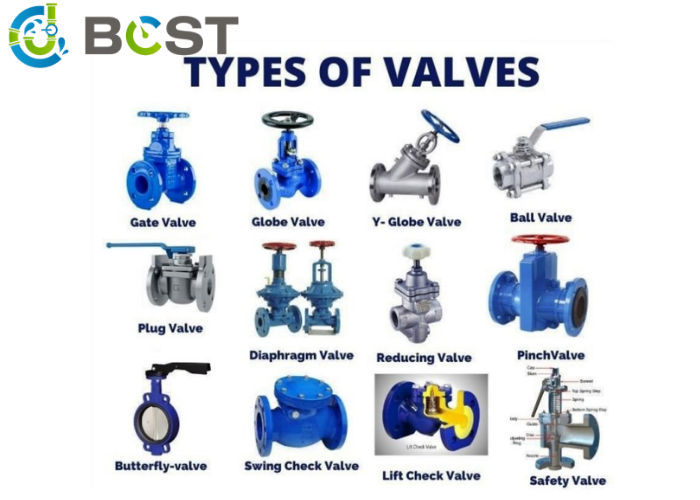
Many factors beyond the basic formula affect a valve’s true performance. These include the fluid’s “thickness” (viscosity), its temperature, the type of valve you choose (ball vs. globe), and how far open it is. These variables must be considered for truly accurate sizing in critical applications.
The basic Cv calculation is a fantastic starting point, and for standard applications with water, it’s often all you need. But as soon as your process involves more complex fluids or conditions, you have to dig deeper. I’ve learned from experienced engineers that the details are where great system design happens. They don’t just calculate a Cv; they consider the entire context. Let’s look at some of the most important factors that can influence your valve’s actual flow capacity.
Fluid Viscosity
Think about pouring water versus pouring honey. The honey is much “thicker”—it has a higher viscosity. It flows much more slowly. The same thing happens inside your pipes. The standard Cv formula assumes you are using a low-viscosity fluid like water. If you are pumping oils, syrups, or heavy chemicals, the fluid’s own internal friction will resist flow. This means the actual flow you get will be less than what the standard Cv calculation predicts. For high-viscosity fluids, you need to apply a viscosity correction factor to your calculation to get an accurate result.
Valve Type and Position
Not all valves are created equal. A full-port ball valve, when fully open, is like a smooth, straight piece of pipe. It creates very little restriction and has a high Cv for its size. A globe valve, on the other hand, is designed to force the fluid through a more complex path. This makes it excellent for throttling and precise control, but its Cv will be much lower than a ball valve of the same size. Furthermore, a valve’s Cv rating is almost always given for the 100% open position. As you start to close the valve, its effective Cv drops rapidly. Understanding a valve’s inherent flow characteristic—how its Cv changes as it closes—is critical for control applications.
Gas and Compressible Flow
The rules change completely when you are working with gases or steam. Unlike liquids, gases are compressible. Their density changes dramatically with pressure and temperature. This makes the calculation far more complex. You can’t use the simple liquid formula. Gas flow calculations must account for the pressure conditions (is it just dropping a little, or is it a huge drop?), the temperature, and the specific molecular weight of the gas. If the pressure drop is too high relative to the inlet pressure, the flow can become “choked,” meaning you can’t get any more flow through the valve no matter how much you lower the downstream pressure. For gas applications, using a specialized Cv Value Calculator that has modes for both gas and liquid is not just a convenience; it’s a necessity.
Conclusión
The Cv value is fundamental to good fluid system design. Using a Cv Value Calculator is the fastest, most reliable way to size válvulas, save energy, and ensure safe, efficient operation.


 English
 Arabic
 Russian
 French
 Spanish