

Choosing the right filter is critical for your system’s health and efficiency. You need to understand how each one works to make the best choice for your application. This guide will walk you through the different types, helping you protect your valuable equipment and maintain smooth operations. Let’s explore the world of pipeline filtration together.
The Versatile Y-Strainer
Your system has sensitive components like pumps and meters that need protection. Even small amounts of debris can cause major failures, leading to expensive replacements. A simple Y-strainer can prevent this.
A Y-strainer is a filter shaped like the letter “Y”. It has a filtering element inside to catch unwanted solid particles from liquids and gases. It is a fundamental component for protecting downstream equipment from damage.
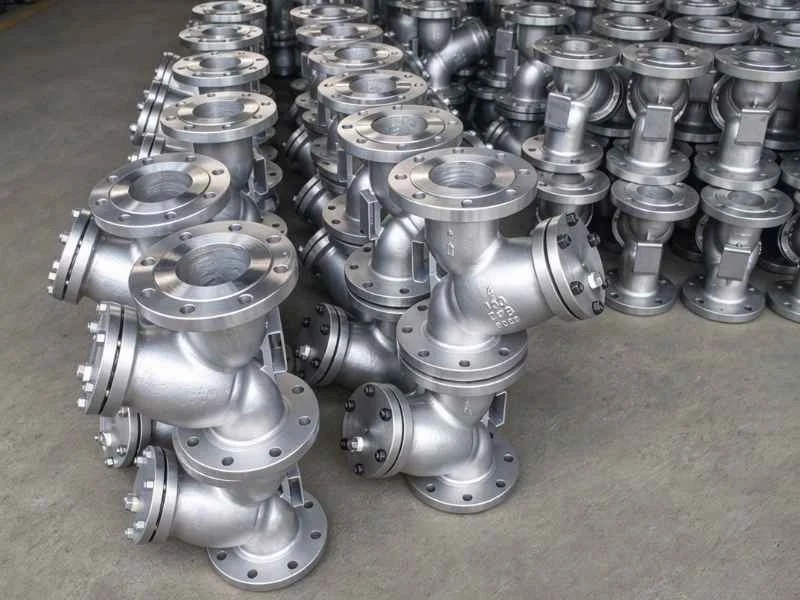
Deeper Look at Y-Strainers
A Y-strainer is one of the most common tools for pipeline filtration. Its compact, Y-shaped body allows it to be installed in both horizontal and vertical pipelines. However, in horizontal lines, the strainer leg must point downwards. This allows the collected debris to settle properly in the pocket. For vertical lines, it works best in a downward flow, where gravity helps push debris into the filter.
I remember my father explaining this to me in our factory when I was young. He said, “Emily, think of it like a trap. The dirt falls in, and the clean water goes on.” That simple idea has stuck with me.
Key Features and Applications
Y-strainers are great for applications where the amount of debris is relatively small. They offer a simple and cost-effective way to protect your system.
| Feature | Description |
|---|---|
| Installation | Can be installed in horizontal and vertical pipes. |
| Flow | Best for moderate flow rates. |
| Debris Load | Ideal for applications with a low concentration of solids. |
| Maintenance | Requires manual cleaning by opening the blow-off cap. |
They are commonly used to protect pumps, turbines, meters, and control valves. You will find them in steam, water, oil, and gas lines across many industries.
The High-Capacity Basket Strainer
Your process might have more debris than a Y-strainer can handle. This means you would need to shut down the line frequently for cleaning, causing interruptions. A basket strainer is the answer.
A basket strainer, also called a pot strainer, has a large, vertically oriented chamber with a removable basket. This design allows it to hold much more debris than a Y-strainer, extending the time between cleanings and reducing downtime.
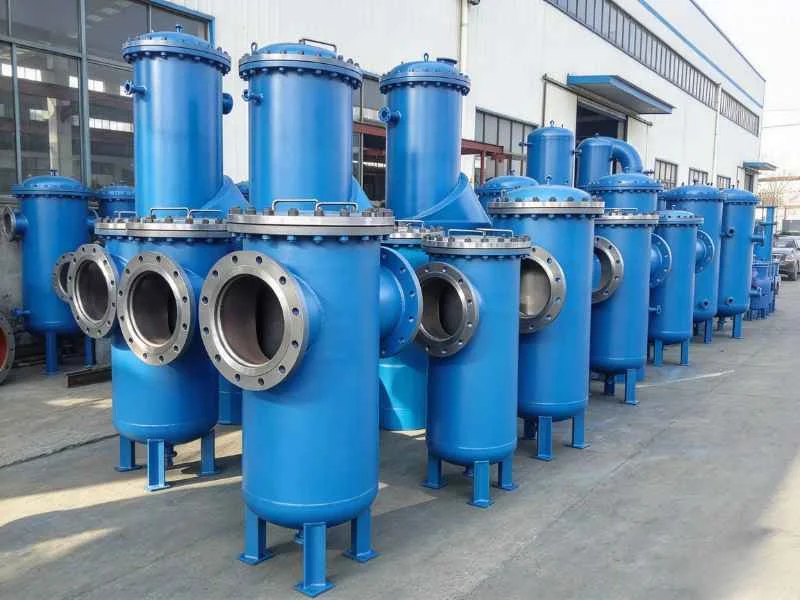
Deeper Look at Basket Strainers
The main advantage of a basket strainer is its large dirt-holding capacity. The filter basket has a much larger surface area than the screen in a Y-strainer. This means it can collect more solids before it needs to be cleaned, and it causes a lower pressure drop across the filter. This makes it ideal for high-flow applications or systems with a higher concentration of particles.
Simplex vs. Duplex
There are two main types of basket strainers, and understanding the classification of pipeline filters helps here.
- Simplex Basket Strainer: This is the basic model with a single basket chamber. When the basket is full, you must shut down the pipeline to open the chamber and clean or replace the basket. It is perfect for systems that can be stopped periodically for maintenance.
- Duplex Basket Strainer: This model has two separate basket chambers connected by valves. This design allows you to switch the flow from one chamber to the other. You can clean one basket while the other is still operating, ensuring continuous, uninterrupted flow. This is critical for processes that cannot be stopped, like in power plants or chemical manufacturing.
I once worked with a Chief Engineer, Hassan, on a large refinery project. He needed a pipeline filtration solution that guaranteed 24/7 operation. For his critical cooling water lines, we chose duplex basket strainers. This ensured the plant could run continuously without any risk of shutdown for filter maintenance.
The Continuous-Flow Duplex Strainer
Stopping your entire production line just to clean a filter is not an option. Any downtime means lost money and productivity. You need a solution that keeps your system running without interruption.
A duplex strainer provides that solution. It consists of two basket strainer housings linked by a diverter valve system. This allows you to switch the flow to a clean filter while you service the dirty one, ensuring continuous operation.
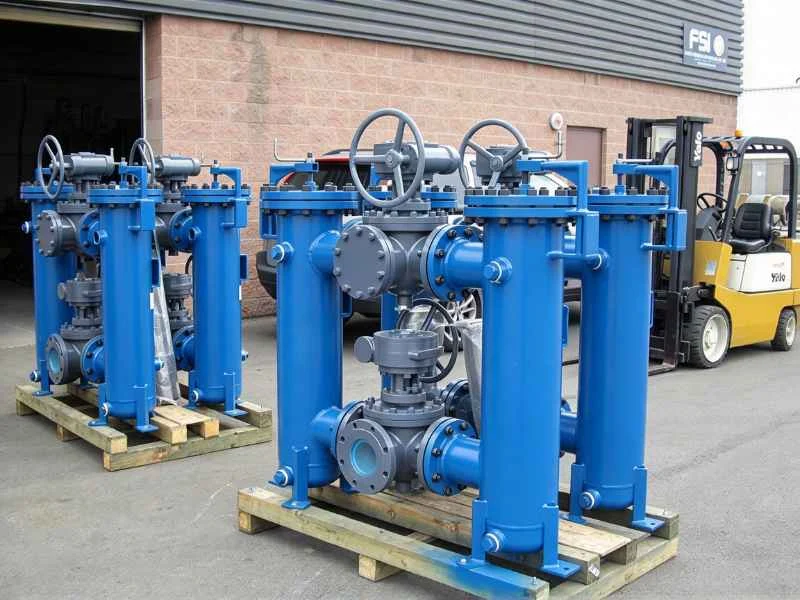
Deeper Look at Duplex Strainers
The main advantage of a duplex strainer is its ability to keep the process running during maintenance. This is essential for critical applications in industries like chemical processing, power generation, and oil and gas. The system uses either linked butterfly valves or a single diverter valve to direct the flow. When the pressure drop across the active strainer increases, the flow is diverted to the standby strainer, allowing the isolated strainer to be safely opened, cleaned, and prepared for its next cycle.
Operational Advantages
| Advantage | Benefit for Your Operation |
|---|---|
| Continuous Flow | No need to shut down the system for cleaning. |
| Increased Safety | Maintenance is done on an isolated, depressurized chamber. |
| High Capacity | Like simplex basket strainers, they can hold a lot of debris. |
| Versatility | Available in a wide range of materials and sizes for different fluids. |
Choosing a duplex strainer is an investment in operational reliability. It protects your equipment and your production schedule at the same time.
The High-Flow T-Type Strainer
In large pipelines with high flow rates, standard strainers can be a bottleneck. They might create too much pressure drop or not be robust enough. You need a filter designed for these demanding conditions.
A T-type strainer is a fabricated filter designed for large-bore piping and high-flow applications. Its straight-through flow path minimizes pressure drop, making it an excellent choice for protecting sensitive equipment in main process lines.
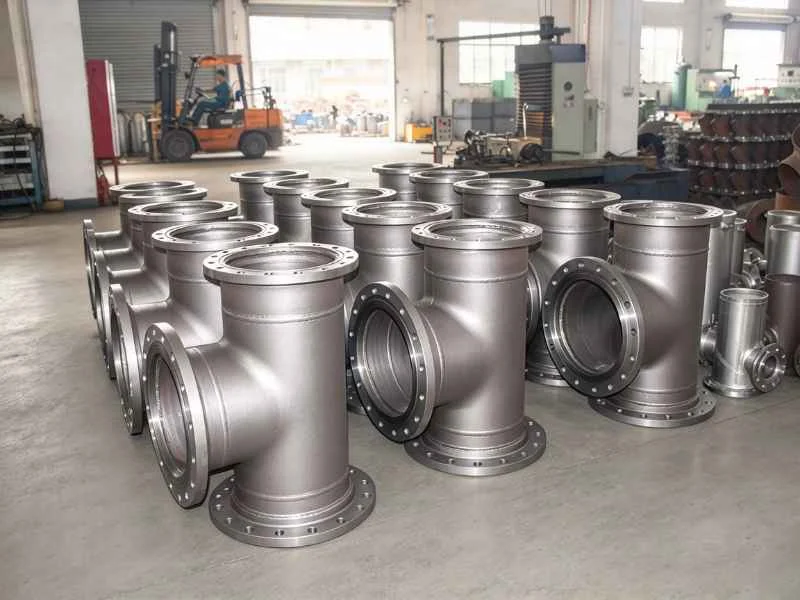
Deeper Look at T-Type Strainers
T-type strainers get their name from their shape, which resembles the letter “T”. The fluid enters and exits in a straight line, while the filter element sits in the perpendicular branch. This design interferes with the flow as little as possible. This is critical in applications where maintaining pressure is important, such as in long-distance pipelines or before high-performance pumps. They can be configured for top removal or bottom removal of the filter element.
Design and Application
- Construction: They are typically welded from plate or pipe and can be made from carbon steel, stainless steel, and special alloys to match the pipeline material and fluid compatibility.
- Access: A bolted cover, quick-opening closure, or hinged cover provides access to the internal basket for cleaning or replacement.
- Applications: They are used in oil and gas transmission lines, refinery mainlines, and large water intake systems to remove rocks, welding rods, and other construction debris before it reaches sensitive equipment.
Temporary Strainers for Startup Protection
After construction or major maintenance, your pipeline may contain hidden debris. Welding slag, rust, and dirt can cause immediate damage to new equipment during startup. Temporary strainers provide an effective way to clean the line.
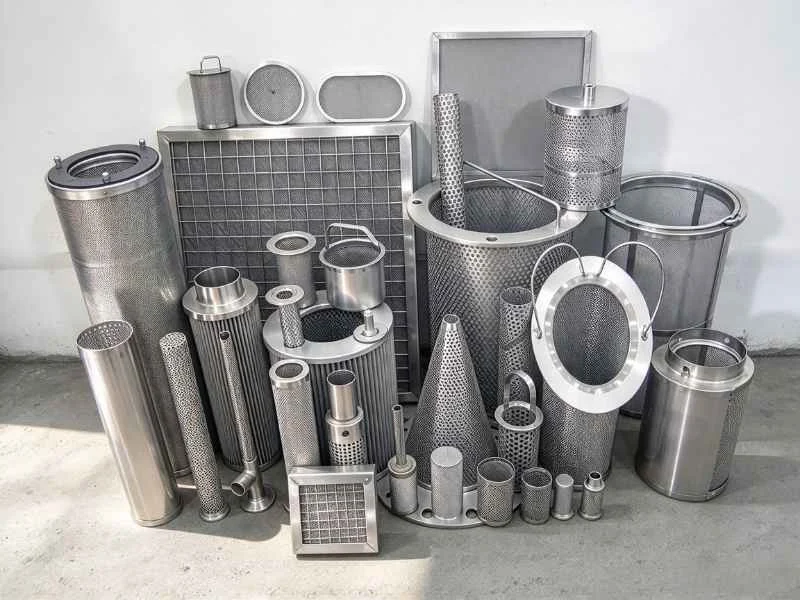
Temporary strainers, like cone strainers or tee strainers, are installed between flanges for a limited time to catch debris during system commissioning and startup, then removed once the system is clean.
Deeper Look at Temporary Strainers
These strainers are a simple, low-cost way to provide short-term protection. They are not meant for permanent use because they have a limited dirt-holding capacity and can create a significant pressure drop as they fill up.
Common Temporary Types
- Cone Strainer (Witch’s Hat): A perforated or mesh-lined cone inserted between two flanges. The pointed end typically faces upstream, depending on the design.
- Basket/Plate Strainer: A flat disc with a basket attached. It is sandwiched between flanges and can offer more dirt-holding capacity than a simple cone strainer.
- Tee Strainer: Designed to be inserted into a tee fitting in the pipeline, offering a temporary filtering solution where a permanent strainer may not fit easily.
Once the initial startup and flushing period is over, it is critical to remove the temporary strainer. If left in place, it can become clogged and collapse, potentially causing more damage than it prevented.
Automated Pipeline Filtration Solutions
In many modern plants, manual labor is expensive and time-consuming. Shutting down a line to clean a filter is inefficient, especially in remote locations. Self-cleaning and backwash filters help automate this process.
These automated pipeline filtration systems can monitor contamination and initiate a cleaning cycle automatically, often without interrupting the main process flow.

Deeper Look at Automated Filters
These advanced filters may use a differential pressure switch to monitor clogging. When the pressure drop reaches a preset level, a controller starts the cleaning cycle. This can reduce labor costs, improve operational efficiency, and provide consistent filtration performance.
How They Work
- Self-Cleaning Filters: Many use a mechanical scraper or brush to dislodge debris from the filter element. The debris is then flushed out through a drain valve. Some designs allow the main process flow to continue during cleaning.
- Backwash Filters: These reverse the flow through the filter element to dislodge trapped particles. The dirty backwash fluid is discharged through a flush port.
Frequently Asked Questions about Pipeline Filtration
1. What is the main purpose of pipeline filtration?
The main purpose of pipeline filtration is to remove unwanted solid particles, debris, and contaminants from liquids or gases flowing through a pipe. This protects downstream equipment like pumps, meters, and valves from damage, prevents blockages, helps maintain product quality, and improves system efficiency.
2. How do I choose the right size for pipeline filtration?
Consider the flow rate, particle size to be removed, acceptable pressure drop, and dirt-holding capacity. Consult engineering data sheets or a filtration expert to size a filter for your specific application.
3. What’s the difference between a filter and a strainer in pipeline filtration?
A strainer typically removes larger particles using a perforated plate or wire mesh screen. A filter often removes finer particles using a cartridge or other filter media. In general, strainers protect equipment, while filters provide finer fluid cleaning.
4. How often should I clean my pipeline filtration unit?
Cleaning frequency depends on the strainer type and the amount of contamination in the process fluid. Monitoring the differential pressure across the unit is a useful way to determine when cleaning is needed. Follow the manufacturer’s recommended maintenance limits.
5. Can pipeline filtration be used for gases as well as liquids?
Yes. Y-type, basket, and T-type strainers can be used in suitable gas and air pipelines to remove pipe scale, dust, and other solid contaminants. The design and sizing must account for the gas properties and operating conditions.
6. Why is pressure drop important in pipeline filtration?
Pressure drop is the difference in pressure between a filter’s inlet and outlet. It generally increases as debris accumulates. Excessive pressure drop can reduce flow and increase pumping costs. Monitoring it helps determine when maintenance is required.
Final Thought
Choosing the right pipeline filtration system is not just about buying a part; it is an investment in your plant’s reliability and longevity. From simple Y-strainers to automated backwash systems, each has its place. BCST can help you evaluate your options and find a suitable solution for your application.


 English
 Arabic
 Russian
 French
 Spanish