
Is Your Current Valve Failing?
For plant engineers, maintenance managers, and operations supervisors, the signs of valve failure are more than just a nuisance—they’re red flags signaling potential safety hazards, environmental risks, and costly unscheduled downtime. In demanding industrial environments, standard valves often struggle to keep pace with extreme temperatures, abrasive media, corrosive chemicals, and high-pressure differentials. When your current valves repeatedly fail, leading to leaks, high operating torque, or frequent replacements, it’s not just a maintenance issue; it’s a clear indicator that you’re using the wrong tool for the job.
If your facility is plagued by persistent valve problems in critical applications, it’s time to consider a specialized, high-performance solution. This guide will walk you through five critical signs that your operations require an upgrade to a PBV Severe Service Valve – specifically, our Z1 and Z2 metal-seated ball valve series designed to conquer the most challenging operating conditions.
Don’t let inadequate valve performance compromise your plant’s efficiency, safety, or profitability. Recognizing these warning signs early can save you significant headaches and expenses down the line.
1. Persistent External or Internal Leakage
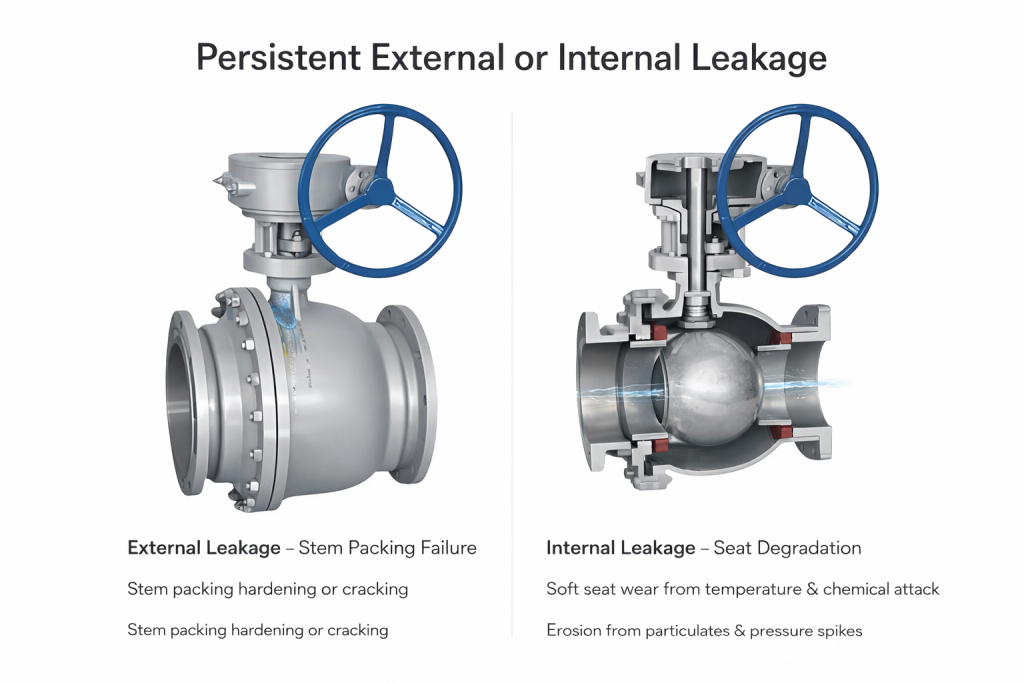
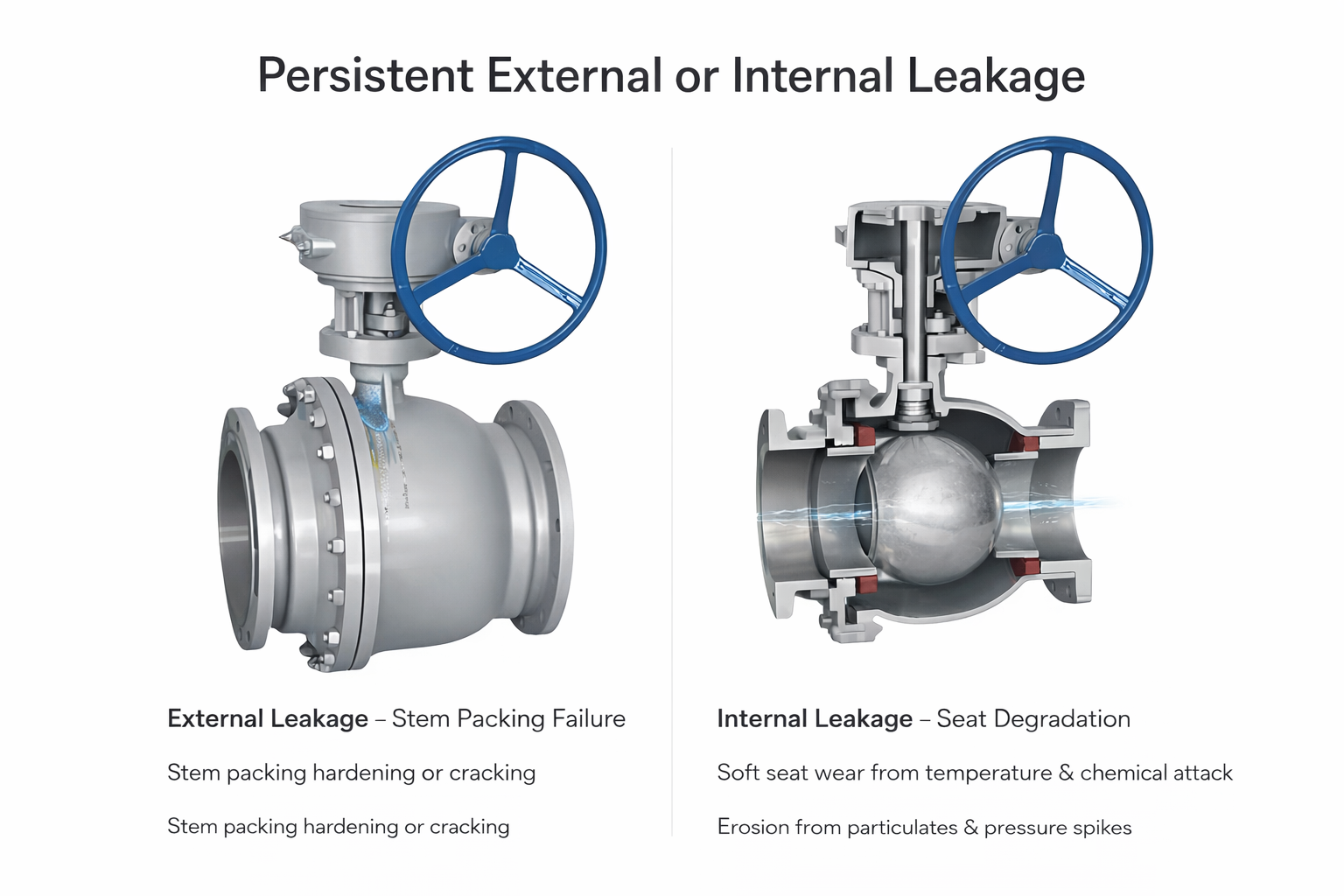
The Problem: Leakage, whether it’s a visible drip from the stem packing (external) or an undetected seep through a closed valve (internal), is arguably the most common and dangerous sign of valve failure. External leaks can pose immediate safety risks (flammable or toxic media), environmental concerns, and product loss. Internal leaks (seat leakage) mean your block valve isn’t providing true isolation, jeopardizing maintenance, safety procedures, and process efficiency.
Why it’s Happening: In severe service, soft seats degrade quickly due to temperature fluctuations, chemical attack, erosion from particulates, or pressure spikes. Stem packing can harden, crack, or wash out under harsh conditions.
The PBV Severe Service Solution:
- Metal Seating (Z1/Z2 Series): Our PBV Series Z1 and Z2 valves feature precisely machined metal seats often coated with durable materials like Tungsten Carbide (WC), Chrome Carbide (CrC), or ceramics. These hard coatings resist wear, erosion, and chemical attack, maintaining a tight shut-off even in abrasive or erosive services.
- Robust Stem Packing: Designed with heavy-duty stem packing systems, often graphite-based or using advanced polymers, to ensure integrity under high pressures, extreme temperatures, and thermal cycling, drastically reducing external leakage.
2. Rapid Seat Erosion and Wear
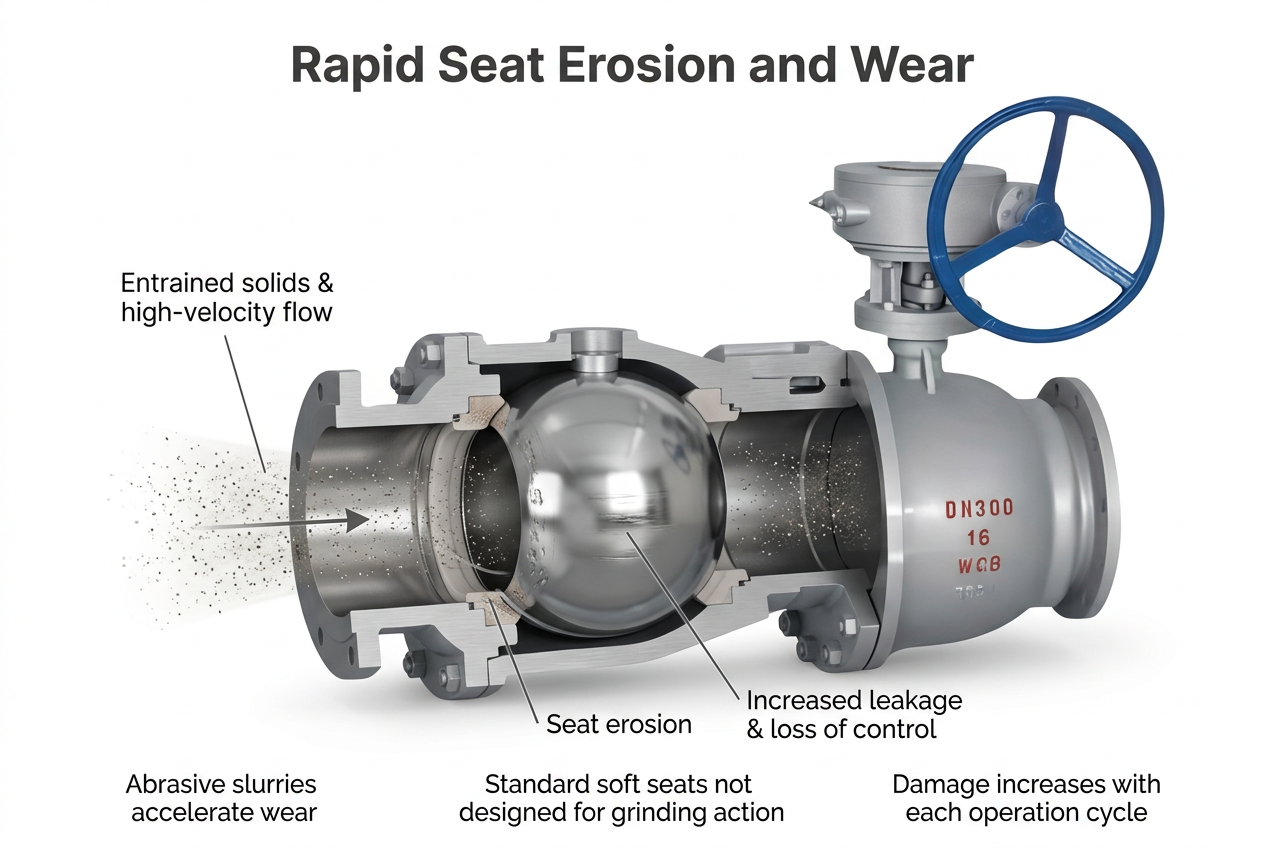
The Problem: If your process involves slurries, catalysts, entrained solids, or high-velocity fluids, you’ll likely observe rapid degradation of valve seats and ball surfaces. This erosion quickly leads to increased leakage, decreased flow control, and ultimately, complete valve failure, often necessitating frequent, costly repairs or replacements.
Why it’s Happening: Standard valve materials and soft seating are simply not designed to withstand the continuous grinding, pitting, or cutting action of abrasive media or the sheer force of high-velocity flow. Each operation cycle exacerbates the damage.
The PBV Severe Service Solution:
- Hardened Metal Seats & Ball: PBV Series Z1 and Z2 valves feature precisely matched ball and seats, both optimized for hardness and a superior surface finish. Our standard offering includes hard facings like Tungsten Carbide (WC) or Chrome Carbide (CrC) applied through advanced coating techniques (HVOF, plasma spray). These coatings provide exceptional resistance to abrasion, erosion, and scratching, significantly extending operational life.
- Custom Material Selection: For extremely abrasive or erosive slurries, we can provide ceramic ball and seat options, which offer even greater wear resistance than traditional metal hardfacings.
- Engineered Flow Path: Our valves are designed to minimize turbulence and pinpoint erosion, especially during throttling or opening/closing cycles.
3. Excessive Operating Torque or Actuator Failure
The Problem: If your valve (especially a floating ball valve) is operating in a high-pressure differential or high-temperature environment, you might notice that it becomes increasingly difficult to open or close, leading to “sticky” operation. This excessive torque can strain and eventually damage manual operators or cause actuators to fail prematurely, leading to operational delays and costly repairs.
Why it’s Happening: In floating ball valves, high line pressure forces the ball tightly against the downstream seat, creating high friction and increasing the force needed to turn the ball. In trunnion valves, insufficient robust trunnion supports or poor bearing design can also contribute. Additionally, media build-up or thermal expansion can exacerbate the problem.
The PBV Severe Service Solution:
- Trunnion-Mounted Design (Inherently Lower Torque): Most PBV Severe Service valves are based on the trunnion-mounted design. This means the ball is mechanically supported, absorbing the pipeline pressure and preventing it from driving the ball into the seat with excessive force. This significantly reduces the operating torque required compared to floating ball valves, even under high differential pressures. For a detailed breakdown of this design, see our article: Anatomy of a High-Performance Valve: A Deep-Dive into the PBV Trunnion-Mounted Ball Valve.
- Robust Bearings: Our severe service valves utilize heavy-duty bearings (often self-lubricating) and stem supports to further reduce friction and ensure smooth, consistent operation over thousands of cycles.
- Precision Machining: Tight tolerances and superior surface finishes on all moving parts minimize friction and prevent media build-up from hindering operation.
4. Frequent Maintenance & Replacement Cycles
The Problem: Are you constantly scheduling downtime to repair or replace the same valves, year after year? This cyclical failure is a huge drain on resources—labor, spare parts inventory, and lost production time. It suggests that the current valve’s design or materials are fundamentally ill-suited for its application, leading to a high total cost of ownership (TCO).
Why it’s Happening: This is a cumulative result of the problems above: inadequate corrosion resistance, rapid wear, or mechanical fatigue due to stress from harsh operating conditions. The valve simply gives up under continuous duress.
The PBV Severe Service Solution:
- Extended Service Life: By addressing the root causes of failure (erosion, corrosion, high torque), our Z1 and Z2 series significantly extend the operational lifespan of valves in severe conditions. This translates directly to fewer maintenance interventions.
- Designed for Reliability: Every component, from the body material (e.g., Duplex, Inconel, Hastelloy) to the packing and sealing arrangement, is selected and engineered to withstand the specific challenges of severe service environments, assuring long-term dependable performance.
- Lower Total Cost of Ownership: While the initial investment in a severe service valve might be higher, the dramatic reduction in maintenance costs, spare parts, and lost production time offers a superior TCO over the valve’s lifetime.
5. Unexpected Valve Failures in Harsh Processes (e.g., High Temp, Pressure Spikes)
The Problem: Your process might involve extreme temperatures (cryogenic or superheated steam), sudden pressure fluctuations, or media that transitions through different phases (flashing). If your “standard” valves are randomly failing, seizing, or suffering material degradation under these conditions, it indicates they lack the engineering robustness for dynamic, harsh environments.
Why it’s Happening: Standard valve components are often not rated for wide thermal cycling, the stresses of flashing or cavitation, or the specific chemical attack from media under extreme temperatures and pressures. This leads to unpredictable failures that are difficult to troubleshoot and prevent.
The PBV Severe Service Solution:
- High-Temperature & Cryogenic Capabilities: PBV Severe Service valves are meticulously engineered for specific temperature ranges, utilizing specialized body materials, extended bonnets for stem packing cooling/heating, and appropriate seals (e.g., graphite packing for high temps, PCTFE/PEEK for cryo).
- Advanced Metallurgy: Body and trim materials are selected from a range of high-performance alloys (e.g., Inconel, Hastelloy, Monel) that maintain mechanical properties and corrosion resistance even at extreme temperatures and pressures.
- Anti-Cavitation & Anti-Flashing Trim: For applications with severe pressure drops or phase changes, our severe service valves can be equipped with specialized trim designs that minimize cavitation and flashing effects, protecting the valve internals and ensuring smoother flow.
Conclusion
If your existing valves are exhibiting any of these five critical signs, relying on them is a business risk. Recurring issues with leakage, erosion, high torque, frequent repairs, and unpredictable failures in harsh conditions are not normal – they are symptoms of an under-specified solution costing your plant uptime, money, and potentially safety.
Upgrading to a PBV Severe Service Valve, such as our Z1 or Z2 metal-seated ball valve series, is a strategic investment in reliability, safety, and operational efficiency. Designed to withstand the most aggressive conditions, these valves deliver superior performance and significantly reduce your total cost of ownership by virtually eliminating unscheduled maintenance and preventable failures.
Is your plant ready for a valve solution that lasts?


 English
 Arabic
 Russian
 French
 Spanish