
The Complete Guide to Ball Valve Adapters: Threads, Sizes & Types
Connecting a ball valve to an existing plumbing or industrial system might seem straightforward, but incompatible threads, differing pipe sizes, or varying material types can quickly turn a simple installation into a frustrating, leak-prone challenge. This is where ball valve adapters become indispensable heroes, bridging the gaps to ensure a secure, efficient, and leak-free connection.
Whether you’re a DIY homeowner upgrading a faucet, a junior plumber tackling an unfamiliar system, or an MRO technician maintaining critical plant equipment, understanding the nuances of valve adapters is crucial. This comprehensive guide from BCST Valve will demystify adapters, covering the key problems they solve—thread incompatibility, pipe size differences, and material transitions—and showcasing the types you need for every scenario.
What is a Ball Valve Adapter and Why Do You Need One?
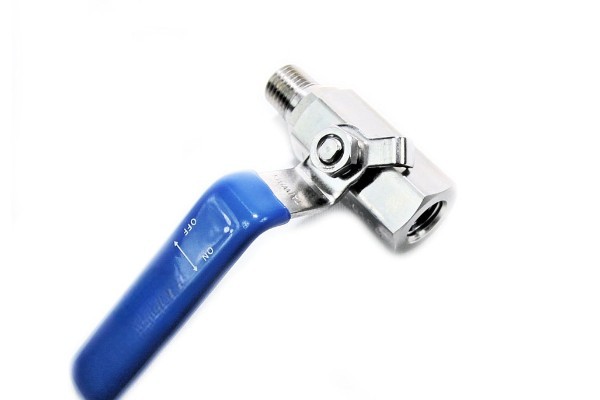
At its core, a ball valve adapter is a fitting designed to connect two components with different specifications that would otherwise be incompatible. These components could have different:
- Thread Types: The shape and pitch of the threading (e.g., NPT vs. BSP).
- Pipe Sizes: The internal or external diameter of the pipes.
- Connection Types/Materials: For transitioning between different piping materials or connection methods (e.g., threaded to PEX, copper, or PVC).
Without the correct adapter, you risk leaks, system inefficiency, costly damage, or simply being unable to complete your installation. Adapters provide the flexibility to integrate various components seamlessly, making them fundamental for both new installations and retrofits.
Problem 1: Thread Incompatibility (NPT vs. BSP)
One of the most common and frustrating sources of leaks and installation headaches stems from mismatched threads. While they might look similar, mixing different thread standards is a recipe for disaster.
Understanding the Core Difference
The two most prevalent international thread standards are:
- NPT (National Pipe Taper) / NPTF (National Pipe Taper Fuel): Predominantly used in North America. These threads are tapered, meaning they get narrower towards the end, creating a mechanical seal as they tighten. Sealant (Teflon tape or pipe dope) is essential for a leak-free connection.
- BSP (British Standard Pipe): Common in Europe, Asia, Australia, and many other parts of the world. BSP threads can be either parallel (BSPP) or tapered (BSPT). BSPP threads require a gasket or O-ring for sealing, while BSPT threads use thread sealant similar to NPT.
Attempting to connect an NPT male thread to a BSP female thread, or vice-versa, will result in an improper fit and guaranteed leakage. The thread angles, pitches (threads per inch), and forms are simply not compatible.
Problem 2: Connecting Different Pipe Sizes
It’s rare for every component in a fluid system to have identical pipe diameters. Adapting a ball valve to a pipeline of a different size is a very common task, requiring specific types of reducing or enlarging adapters.
Common Size Adapters:
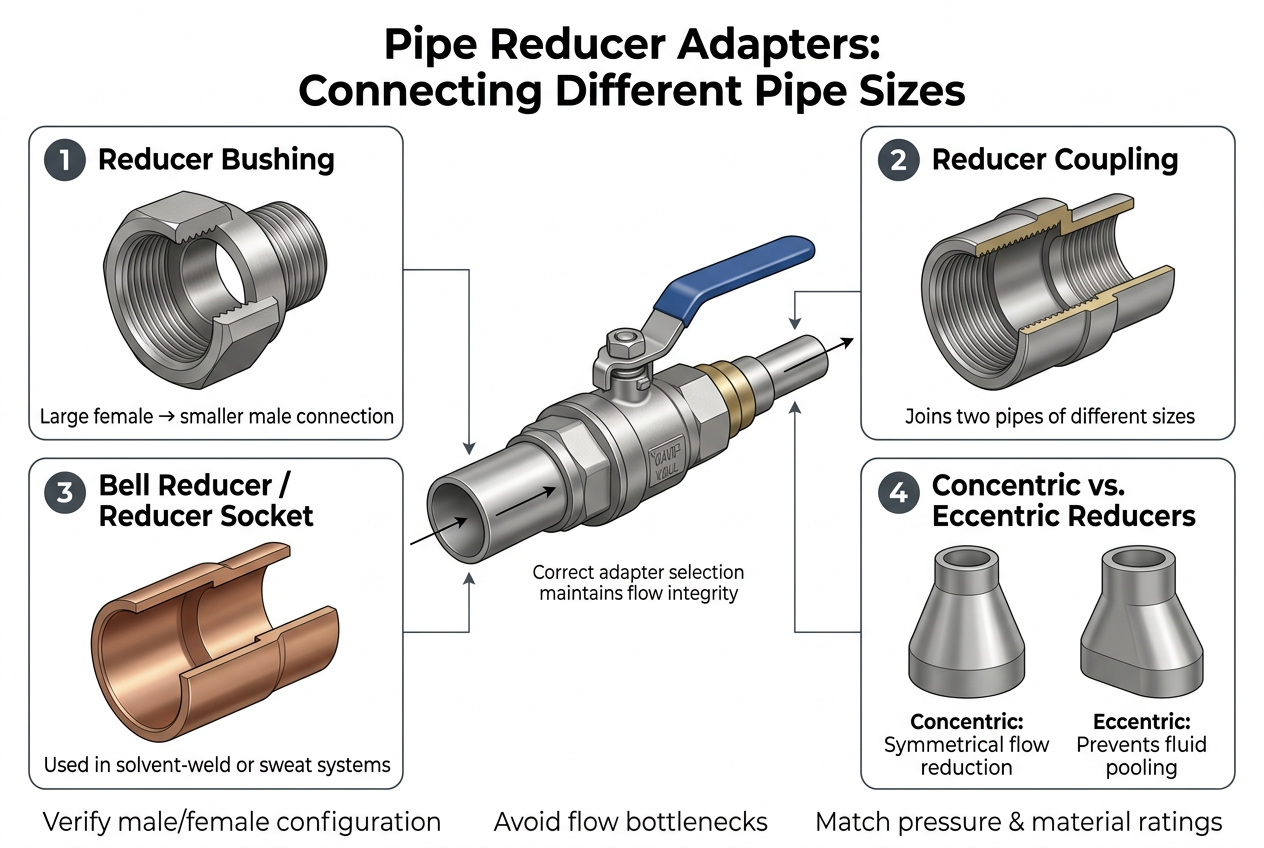
- Reducer Bushings: These fittings have internal (female) threads of one size and external (male) threads of a smaller size. They are used to connect a larger female pipe to a smaller male pipe.
- Reducer Couplings: Used to connect two pipes of different sizes when both are either female or male threaded. They have a larger opening on one end and a smaller opening on the other.
- Bell Reducers (or Reducer Sockets): Often used in solvent-weld (PVC) or sweat (copper) systems to join two pipes of different diameters.
- Eccentric/Concentric Reducers: Primarily for larger industrial pipes, these change the flow diameter; concentric are cone-shaped, eccentric are offset for better drainage in horizontal lines.
Choosing the correct size adapter and ensuring the correct male/female configuration for each end is essential to maintain flow characteristics and prevent bottlenecks or inadequate connections.
Seamless Size Transitions:
Connecting a valve to a smaller or larger pipe is a simple task with the right fitting. Learn your options in How to Connect Different Pipe Sizes: A Guide to Reducing Adapters.
Problem 3: Material Transitions (e.g., Threaded to PEX, Copper & PVC)
Modern plumbing systems often utilize materials like PEX, copper, and PVC for their specific advantages. However, many ball valves still feature traditional threaded ends, necessitating adapters for a secure transition between these different materials and connection methods.
Adapters for Common Piping Materials:
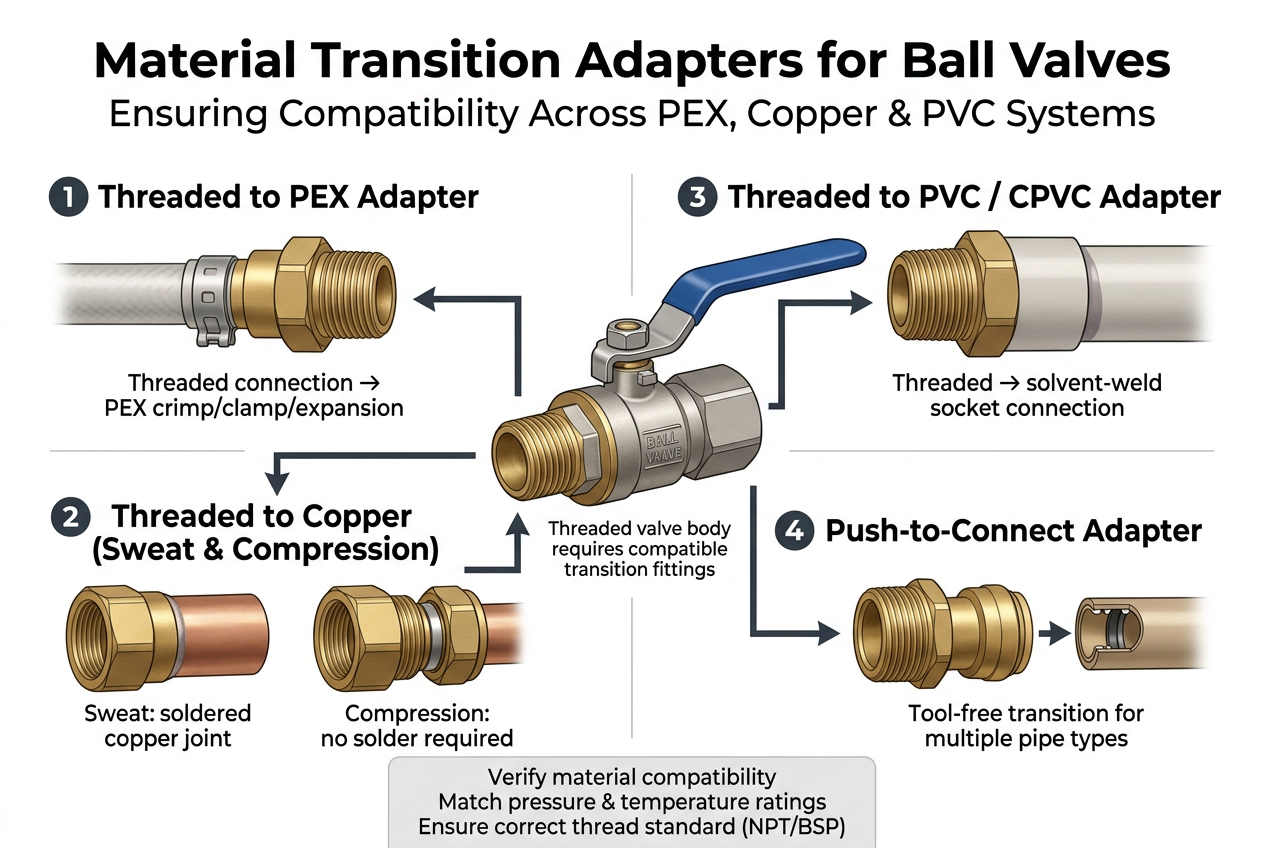
- Threaded to PEX Adapters: These fittings have male NPT/BSP threads on one end and a PEX crimp, clamp, or expansion connection on the other. They allow standard ball valves to integrate into flexible PEX systems.
- Threaded to Copper Adapters (Sweat/Compression):
- Sweat Adapters: Feature threads on one end and a smooth connection for soldering (sweating) onto copper pipe.
- Compression Adapters: Use a compression nut and ferrule to create a watertight seal around a copper pipe without soldering.
- Threaded to PVC/CPVC Adapters: Typically feature male or female threads on one end and a socket end for solvent welding (gluing) to PVC or CPVC pipe.
- Push-to-Connect Adapters: A versatile, tool-free option compatible with PEX, copper, and CPVC pipes, offering threaded connections on the valve end.
When transitioning between materials, always consider potential for galvanic corrosion if dissimilar metals are in direct contact – and use dielectric unions where recommended.
Mastering Material Conversions:
Adapting a traditional threaded valve to systems like PEX or copper requires a specific type of fitting. We show you how in our guide, Connecting Ball Valves to PEX, Copper & PVC.
Key Considerations for Selecting Any Ball Valve Adapter
Beyond solving the three main compatibility problems, several other factors influence your adapter choice:
- Material Compatibility: Ensure the adapter material is compatible with your fluid medium (water, chemicals, gas) to prevent corrosion or degradation. Common adapter materials include brass, stainless steel, PVC, and CPVC.
- Pressure and Temperature Ratings: The adapter must withstand your system’s maximum operating pressure and temperature. Never exceed these ratings.
- Flow Characteristics: In industrial applications, ensure that reducing adapters don’t create excessive pressure drops or turbulence that could impact system performance.
- Certifications: For potable water or specific industrial applications, look for relevant certifications (e.g., NSF, ASTM, API).
BCST Valve Quality: Adapters You Can Trust
At BCST Valve, our comprehensive range of ball valves and adapters are engineered to the highest standards, ensuring optimal performance, durability, and leak-free reliability. We understand the critical role adapters play in maintaining system integrity, which is why we offer robust solutions for every thread, size, and material transition challenge.
Conclusion
Ball valve adapters are far more than just simple fittings; they are essential components that enable seamless integration across diverse piping systems. By understanding the core challenges of thread incompatibility, pipe size differences, and material transitions, you can confidently select the right adapter for a reliable, leak-free installation.
Once you’ve found the right adapter, ensuring a leak-free seal is the final, critical step. Master the technique with our Step-by-Step Guide to Installing Pipe Adapters.
Ready to find the perfect adapter for your ball valve?


 English
 Arabic
 Russian
 French
 Spanish