
The Ultimate Guide to Venturi Valves: Principles, Design, and Performance
Unlocking efficiency and longevity with the power of the Venturi effect in industrial flow control.
When it comes to advanced flow control and energy efficiency in industrial systems, the Venturi valve stands out as a sophisticated solution. Unlike conventional globe or gate valves that rely on abrupt obstructions to modulate flow, a Venturi valve leverages fundamental fluid dynamics principles to achieve precise control with minimal energy loss. Whether you’re an engineer designing a pump system, a purchasing manager evaluating long-term operational costs, or a student delving into industrial instrumentation, understanding the nuances of Venturi valves is crucial for optimizing system performance and sustainability.
Key Takeaway: A Venturi valve isn’t just another control valve; it’s an intelligent flow device designed to minimize turbulence and pressure drop, leading to significant energy savings and extended service life. Its unique geometry handles challenging media and demanding applications with superior efficiency.
At BCST Valve, we have specialized in the design and manufacture of high-performance Venturi valves for over two decades, helping industries worldwide achieve unparalleled control and reliability. This comprehensive guide will deeply explore the foundational principles that govern Venturi valves, detail their innovative design, and highlight the performance characteristics that make them essential in modern industrial applications.
The Fundamental Principles: Harnessing the Venturi Effect
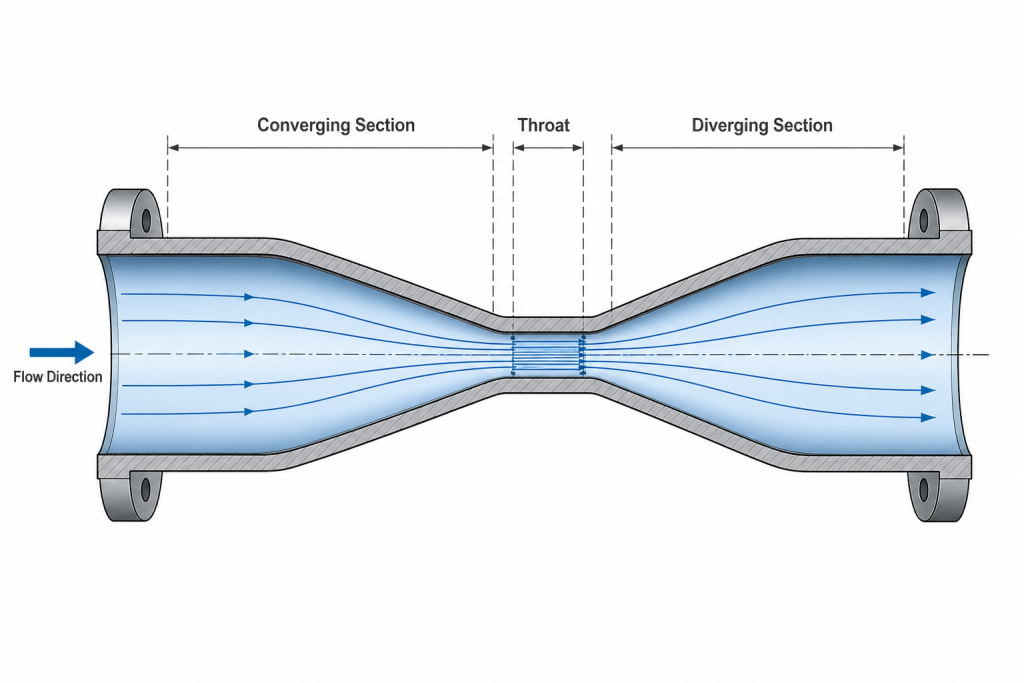
At the heart of every Venturi valve is the **Venturi effect**, a direct application of Bernoulli’s principle. This principle states that for an incompressible inviscid flow, an increase in the speed of the fluid occurs simultaneously with a decrease in pressure or a decrease in the fluid’s potential energy. The valve’s specific geometry is engineered to exploit this phenomenon.
How It Works: Pressure, Velocity, and Recovery
- Converging Section: As fluid enters the valve, it passes through a smooth, conically shaped inlet that gradually narrows. This reduction in cross-sectional area forces the fluid to accelerate.
- Throat (Vena Contracta): At the narrowest point, the fluid reaches its highest velocity and lowest static pressure. This is where the primary flow control takes place.
- Diverging Section: After passing the throat, the fluid enters a gradually expanding section. Here, the velocity decreases, and crucially, a significant portion of the kinetic energy is converted back into static pressure (pressure recovery), minimizing overall pressure loss across the valve.
Unlike traditional valves where energy is dissipated as turbulence and heat, Venturi valves promote laminar flow and efficient energy conversion, leading to typical pressure recoveries of 80% to 95% compared to less than 50% for standard orifice plates for flow measurement.
Advanced Design & Construction
The design of a Venturi valve is a blend of fluid dynamics engineering and robust mechanical construction. While the basic principle is universal, manufacturing quality, material selection, and specific control elements are critical.
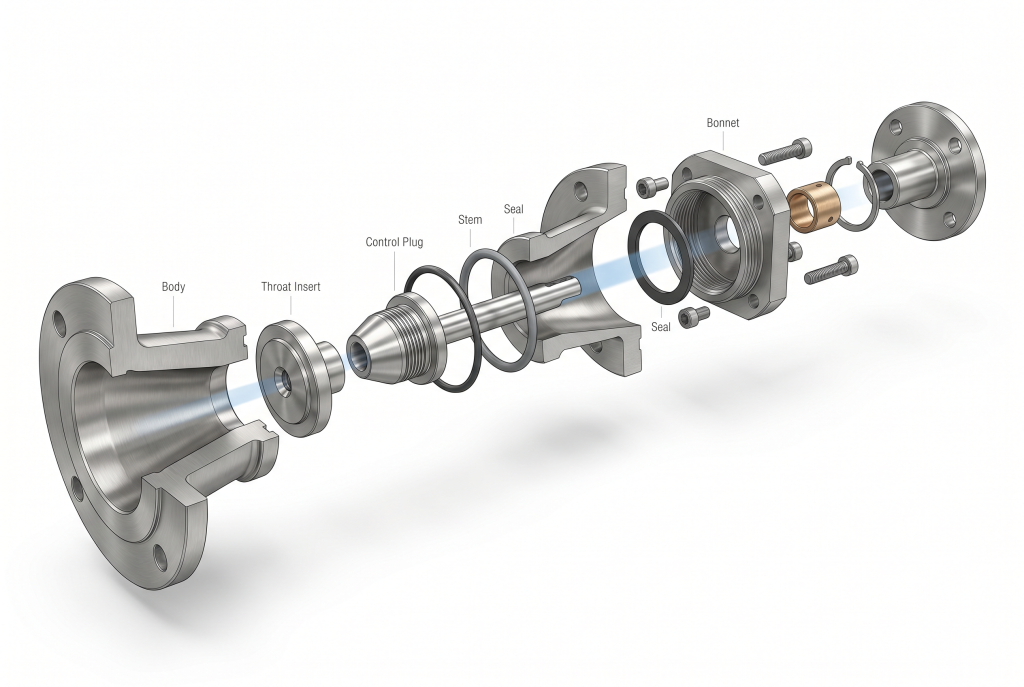
Key Design Elements of a Venturi Valve
- جسم الصمام: Typically cast or fabricated, designed to withstand process pressures and temperatures, incorporating the converging and diverging sections.
- Plug/Disc Mechanism: A precisely shaped plug or disc moves within the throat section to vary the flow area and precisely control fluid velocity and pressure.
- Actuation: Can be manual, pneumatic, electric, or hydraulic, depending on the required control precision and operating environment.
- المواد: Selected based on the fluid’s corrosivity, temperature, pressure, and abrasive nature. Common materials include carbon steel, stainless steel (304, 316), duplex stainless steel, and specialized alloys like Monel or Hastelloy.
Superior Performance Characteristics
The unique design of Venturi valves translates into several distinct advantages that set them apart in demanding industrial applications:
- Low Pressure Drop: This is the hallmark feature, minimizing energy consumption for pumps and compressors by reducing head loss.
- High Turndown Ratio: Capable of controlling flow over a very wide range, from nearly closed to fully open, with precision.
- Reduced Cavitation & Flashing: The smooth, gradual changes in flow area reduce the likelihood of destructive cavitation (vapor bubble formation and collapse) and flashing (sudden vaporization), which are common problems in conventional valves handling high-velocity fluids.
- Minimal Erosion & Wear: Due to streamlined flow paths and absence of abrupt changes in direction, Venturi valves experience significantly less internal erosion, extending valve life.
- تحكّم دقيق: The predictable relationship between flow area and velocity allows for highly accurate and stable flow modulation.
Applications & Practical Considerations
The unique characteristics of the Venturi design make it ideal for a wide range of uses across various industries, from chemical processing to water treatment. Specifically, their ability to handle high-velocity, abrasive, or viscous fluids with minimal line disturbance makes them invaluable. Explore our deep dive into High-Impact Applications for Venturi Valves.
Installation Best Practices
Proper placement and careful installation are absolutely critical to harnessing the full benefits of a Venturi valve, especially in complex pump systems where flow stability and pressure recovery are paramount. For detailed diagrams, flow path analysis, and pipe length recommendations, see our expert guide on Where to Correctly Install a Venturi Valve on a Pump.
Operations, Maintenance, and Troubleshooting
While Venturi valves are known for their inherent reliability and longevity due to their design, the complex control systems they integrate with can occasionally develop issues. Regular preventative maintenance and a systematic troubleshooting approach are essential for sustained operation. We’ve created a detailed guide for diagnosing and resolving common issues: What Can Cause a Venturi Valve Control System to Shut Down?
Energy Efficiency and Retrofitting for ESG Goals
The low pressure-loss profile of Venturi valves offers significant Return on Investment (ROI), especially for environmentally conscious (ESG-focused) projects looking to reduce energy consumption and operational costs. Modernizing existing infrastructure with Venturi technology can lead to substantial reductions in pump energy demands and carbon footprints. Learn how this directly translates to financial gains and environmental benefits in our guide to Retrofitting to Lower Carbon Taxes.
Conclusion: The Smart Choice for Sustainable Flow Control
The Venturi valve is far more than a simple flow regulator; it’s a testament to intelligent engineering. By skillfully applying the Venturi effect, these valves deliver peerless control, exceptional energy efficiency, and extended durability in the most challenging industrial settings. Their ability to minimize pressure drop and resist erosion makes them an indispensable asset for operations striving for both peak performance and environmental stewardship.
At BCST Valve, our commitment to innovation means providing you with Venturi valves that don’t just meet, but exceed industry standards. Enhance your system’s efficiency, reduce maintenance costs, and move towards a more sustainable operational future with BCST Valve’s advanced Venturi solutions.
Ready to optimize your flow control with Venturi technology?


 English
 Arabic
 Russian
 French
 Spanish