
Why Won’t Your Knife Gate Valve Close Completely?
The actuator is straining, but the valve is stuck open by an inch. Production is stopped. The real cause is often simpler and more frustrating than a bent gate or broken actuator: your knife gate valve isn’t broken; it’s choked.
Your knife gate valve won’t close because solids from your process media have settled and packed tightly into the bottom cavity of the valve body. This compacted material physically obstructs the gate, preventing it from reaching its fully closed position—a common failure in conventional valve designs.
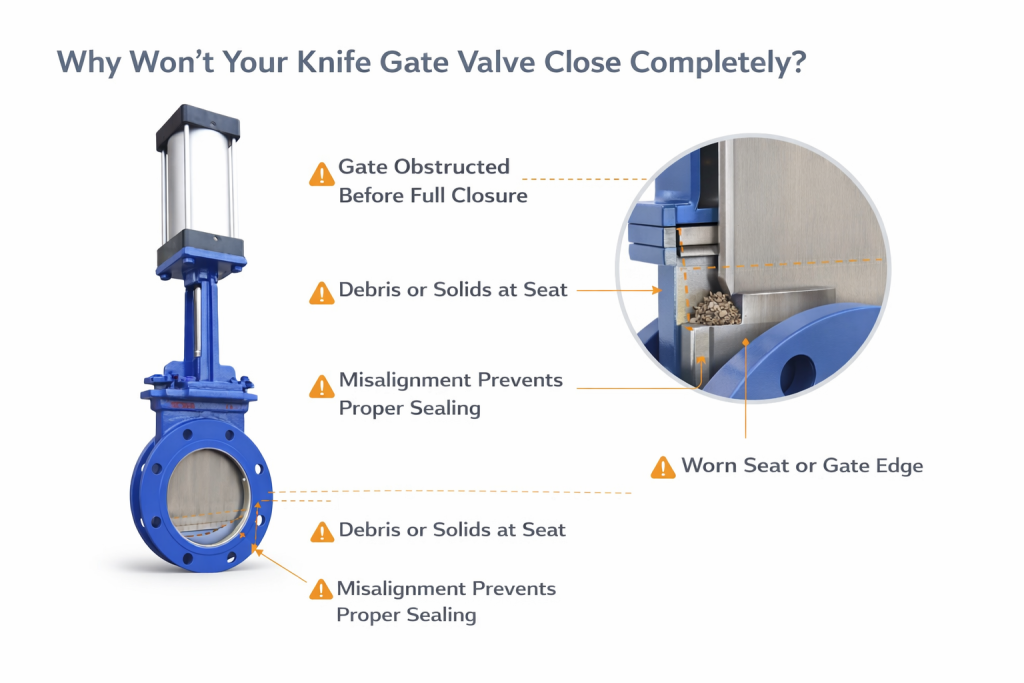
As a study on slurry valves confirms, deposition and erosion are concentrated at the gate-seat interface, which is exactly where this clogging occurs.
How Do Solids Actually Jam a Knife Gate Valve?
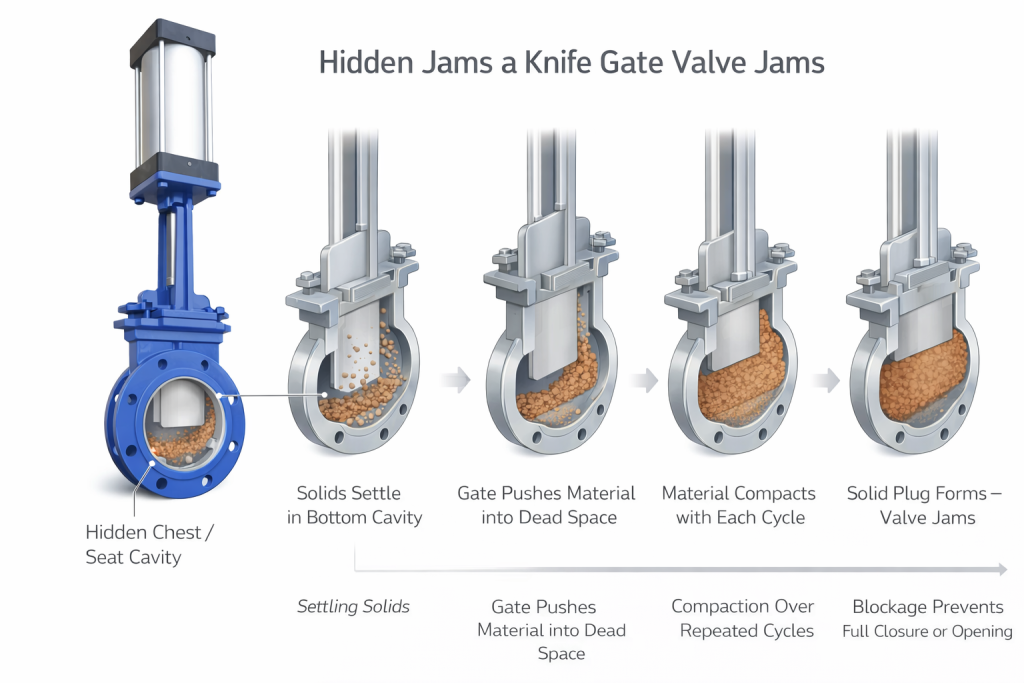
Clogging occurs when particles in the media settle out and get trapped in the valve’s bottom cavity or chest area. With each cycle, the descending gate pushes more material into this dead space and compacts it, eventually forming a solid blockage.
The Mechanics of Compaction
This is a predictable outcome in a standard, uni-directional knife gate valve. The bottom cavity is a low-flow area where heavier material naturally settles. The closing gate then acts like a piston, turning loose sediment into a brick-like obstruction.
| نوع الوسائط | Clogging Mechanism |
|---|---|
| Abrasive Slurry (Sand) | Heavy particles settle quickly and pack tightly into a dense “brick.” |
| Fibrous Media (Pulp) | Fibers get caught, dewater under pressure, and form a tough, tangled plug. |
| Dry Bulk Solids (Cement) | Fine material is pushed into the cavity and packs down, sometimes solidifying with moisture. |
What Design Features Prevent Clogging?
Solving the clogging issue comes down to two strategies: actively cleaning the cavity or choosing a صمام بوابة السكين design that eliminates the cavity. Often, the problem starts with the wrong choice between a metal or resilient seat for the service.
Short-Term Fix vs. Permanent Solution
1. The Active Cleaning Solution: Flush / Purge Ports
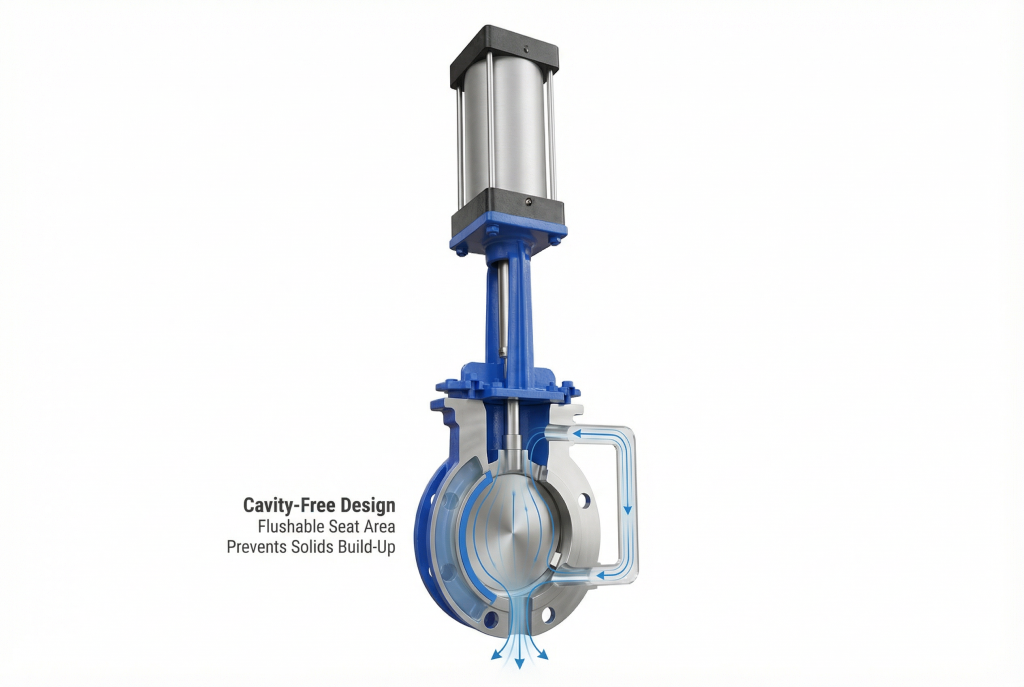
These are threaded connections into the valve’s seat area. By periodically flushing with water, air, or steam, operators can blast out solids before they compact. This turns a major shutdown into a routine task.
2. The Engineering Solution: Through-Conduit Knife Gate Valve
This is the superior, long-term solution. When open, the valve creates a smooth, continuous pipe with no cavities for solids to settle in. It is inherently self-cleaning and the ultimate “install and forget” solution for heavy slurry.
| Strategy | صمام قياسي | Valve with Flush Ports | Through-Conduit Valve |
|---|---|---|---|
| Problem | Cavity collects solids. | Cavity exists but is manageable. | Design eliminates the cavity. |
| حل | Reactive (Manual Cleaning) | Proactive (Periodic Flushing) | Preventative (Self-Cleaning) |
| الأفضل لـ | Clean liquids only. | Medium-duty slurries. | Heavy, abrasive slurries. |
خاتمة
Stop fighting with a jammed knife gate valve. Recognize that clogging is a design problem, not just a maintenance issue. Solve it by specifying valves with flush ports for manageable service or, ideally, choosing a through-conduit design for a permanent, reliable solution in tough applications.


 English
 Arabic
 Russian
 French
 Spanish