

The most common valve types in plumbing and industrial systems are water gate valves and stop valves. Each valve has a different usage. It’s important to know the difference for competent decisions when installing or replacing valves in your system. In this article, we will address the question of whether a water gate valve can serve as a stop valve and, at the same time, provide illumination into scenarios where one or the other is applicable.
Understanding Water Gate Valve
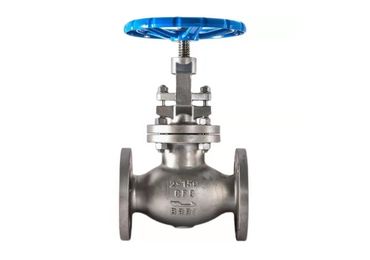
The water gate valve is designed either to allow or block the water flow in a system. The gate, housed within the valve, rises and falls. It blocks the flow way when up, and clears it when down. This makes it suitable for situations that require either full opening or complete closure. Such valves are very common in systems where the flow needs to be either completely stopped or allowed, but not throttled.
The Advantages of Water Gate Valves
The water gate valve provides full open, allowing smooth and free flow of the liquid. It also provides full close, stopping the flow of the liquid completely.
Minimal pressure loss is achieved as the valve opens fully, leading to negligible flow resistance.
Durability: Water gate valves are strong and can take high pressure application, hence are suitable for water distribution systems.
What is a stop valve?

This is a kind of valve fabricated for the purpose of turning on or off water flow within a system. Usually, local control of water supply is necessary in domestic plumbing. It is commonly installed under sinks or near appliances. Commonly, the valves provide a more accurate flow command compared to water gate valves.
Advantages of Stop Valves
Flow control: Unlike gate valves, these valves can regulate water flow rates. You can partially shut these valves while the flow is still on.
Compact design: Several stop valves are smaller in size, hence more convenient to install in tight areas.
Ease of use: They are often designed such that they should provide quick and easy shut-off, mainly during emergencies.
Can water gate valves be used as stop valves?
A water gate valve is superior for controlling the water flow in extensive systems. However, it is less efficient in performing critical control or throttling. On the other hand, a stop valve is designed for providing local control of water flow. It is often used where quick and easy access for water shutoff is necessary.
The Reasons Water Gate Valve is Unsuitable as Stop Valve
This is because water gate valves are either fully open or completely closed. This makes them unsuitable for tasks that require gradual control of the flow of water.
General Use: Water gate valves are not designed for frequent opening and closing. Their mechanism wears out more quickly than that of stop valves, which are intended for constant use.
Precision: Stop valves do allow for far greater precision in water flow control. A water gate valve does not provide that form of precision but is better used in systems that are large and don’t require frequent adjustment.
When can a water gate valve serve the purpose of a stop valve?
In larger systems, where the need to either shut off or allow the full flow of water is more important than fine control over flow, a water gate valve can be applied instead of a stop valve. However, a stop valve is the favorite for household applications or localized purposes since it is easier to operate and thus allows finer control over flow.
Comparison: Water Gate Valve vs. Stop Valve
| Features | Water Gate Valve | Stop Valve |
|---|---|---|
| Primary Function | Complete flow on/off | Stop/start and flow control |
| Flow Control | No (only full open or closed) | Yes (allows partial closure) |
| Frequency of Use | Infrequent | Frequent |
| Installation Area | Larger systems (main lines, industrial use) | Localized systems (home plumbing, appliances) |
| Durability | High | Moderate (designed for quick shut-offs) |
Water Gate Valves vs. Stop Valves All in all, while a water gate valve may be used in place of a stop valve at times, especially on bigger systems that do not require finesse control, the stop valve remains unparalleled as the best option for most residential and localized uses. Stop valves serve better flow control and are friendlier to deal with in most everyday plumbing operations. If your system requires opening and closing pretty frequently or partial flow management, a stop valve becomes very essential.


 English
 Arabic
 Russian
 French
 Spanish